Publications

title: Publications cms_exclude: true

View.

1 = List

2 = Compact

3 = Card

4 = Citation

view: 4

Optional header image (relative to static/media/ folder).

header: caption: ’' image: ''

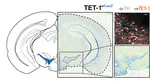
Midbrain Tet1 dosage defines inter-individual binge-eating susceptibility
Binge-eating disorder (BED) is the most common eating disorder worldwide and carries life-altering comorbidities. While genetic and …
HDAC5 controls a hypothalamic STAT5b-TH axis, the sympathetic activation of ATP-consuming futile cycles and adult-onset obesity in male mice
With age, metabolic perturbations accumulate to elevate our obesity burden. While age-onset obesity is mostly driven by a sedentary …
Oxytocin does not acutely improve glucose tolerance in men with type 2 diabetes
Global, neuronal or $β$ cell-specific deletion of inceptor improves glucose homeostasis in male mice with diet-induced obesity
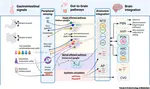
High-calorie diets uncouple hypothalamic oxytocin neurons from a gut-to-brain satiation pathway via $ąppa$-opioid signaling
Oxytocin-expressing paraventricular hypothalamic neurons (PVN^OT neurons) integrate afferent signals from the gut, including …
Epigenetic dosage identifies two major and functionally distinct $β$ cell subtypes
The dietary sweetener sucralose is a negative modulator of T cell-mediated responses
Estradiol regulates leptin sensitivity to control feeding via hypothalamic Cited1
An analgesic pathway from parvocellular oxytocin neurons to the periaqueductal gray in rats
Analysis of the hypothalamic oxytocin system and oxytocin receptor‐expressing astrocytes in a mouse model of <scp>Prader–Willi</scp> syndrome
Diet triggers specific responses of hypothalamic astrocytes in time and region dependent manner
Hypothalamic astrocytes are particularly affected by energy-dense food consumption. How the anatomical location of these glial cells …
Independent phenotypic plasticity axes define distinct obesity sub-types
Studies in genetically ‘identical’ individuals indicate that as much as 50% of complex trait variation cannot be traced to …
Astroglial clean-up of satiety synapses
Global, neuronal, and beta-cell specific deletion of insulin inhibitory receptor (incep-tor) improves glucose homeostasis in diet-induced obese mice
Auto-aggressive CXCR6$mathplus$ CD8 T cells cause liver immune pathology in NASH
Active integrins regulate white adipose tissue insulin sensitivity and brown fat thermogenesis
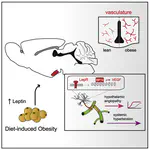
Obesity-associated hyperleptinemia alters the gliovascular interface of the hypothalamus to promote hypertension
Summary Pathologies of the micro- and macrovascular systems are a hallmark of the metabolic syndrome, which can lead to chronically …
Control of Systemic Metabolism by Astrocytes in the Brain
Functional identity of hypothalamic melanocortin neurons depends on Tbx3
Heterogeneous populations of hypothalamic neurons orchestrate energy balance via the release of specific signatures of neuropeptides. …
Coordinated targeting of cold and nicotinic receptors synergistically improves obesity and type 2 diabetes
Pharmacological stimulation of brown adipose tissue (BAT) thermogenesis to increase energy expenditure is progressively being pursued …
Chronic D-serine supplementation impairs insulin secretion
The metabolic role of d-serine, a non-proteinogenic NMDA receptor co-agonist, is poorly understood. Conversely, inhibition of …
Astrocytic Insulin Signaling Couples Brain Glucose Uptake with Nutrient Availability
We report that astrocytic insulin signaling co-regulates hypothalamic glucose sensing and systemic glucose metabolism. Postnatal …
A New Population of Parvocellular Oxytocin Neurons Controlling Magnocellular Neuron Activity and Inflammatory Pain Processing
Oxytocin (OT) is a neuropeptide elaborated by the hypothalamic paraventricular (PVN) and supraoptic (SON) nuclei. Magnocellular OT …